Community Conversation Feedback
Community Conversations
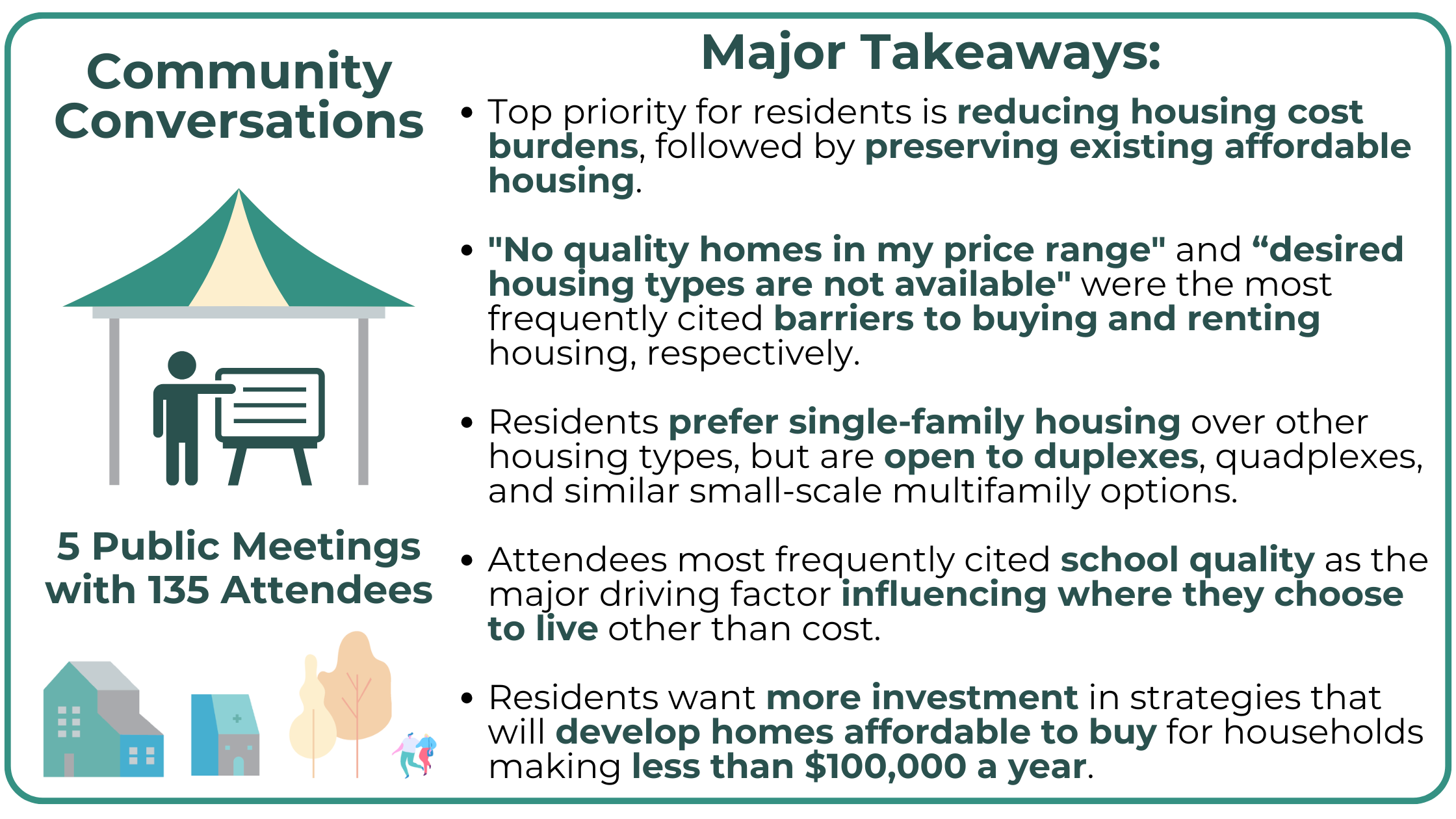
DeKalb County hosted Community Conversations events across the county to collect public input during March 2026 for its first-ever Comprehensive Housing Plan! 135 residents and stakeholders attended the five meetings in this series to provide crucial insights on the state of DeKalb County’s housing ecosystem and their priorities for the County. Five major takeaways can be synthesized from the results of activities and conversations held during these events:
- Top priority for residents is reducing housing cost burdens, followed by preserving existing affordable housing.
- "No quality homes in my price range" and “desired housing types are not available" were the most frequently cited as barriers to buying and renting housing, respectively.
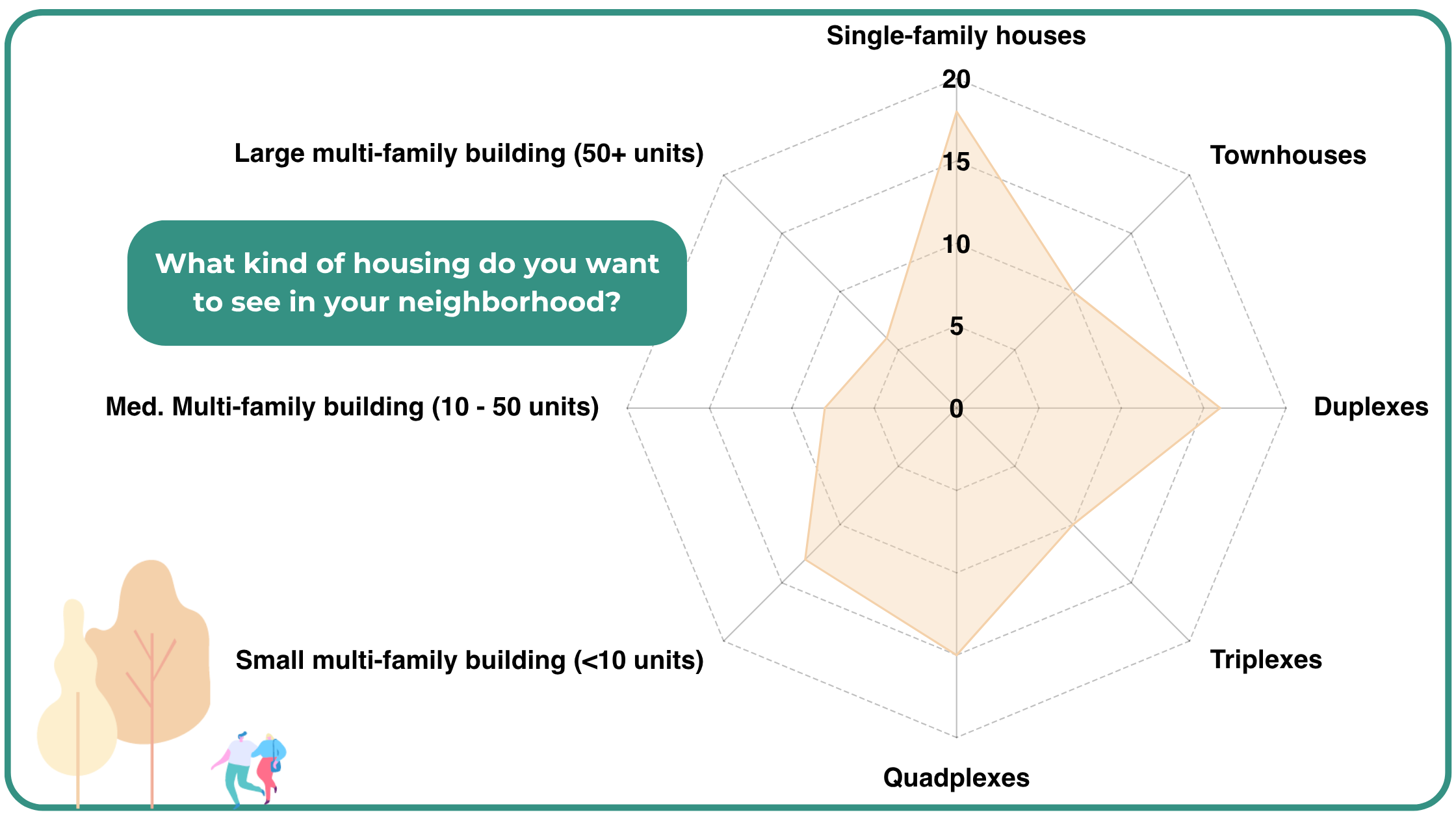
- Residents prefer single-family housing over other housing types, but are open to duplexes, quadplexes, and similar small-scale multifamily options.
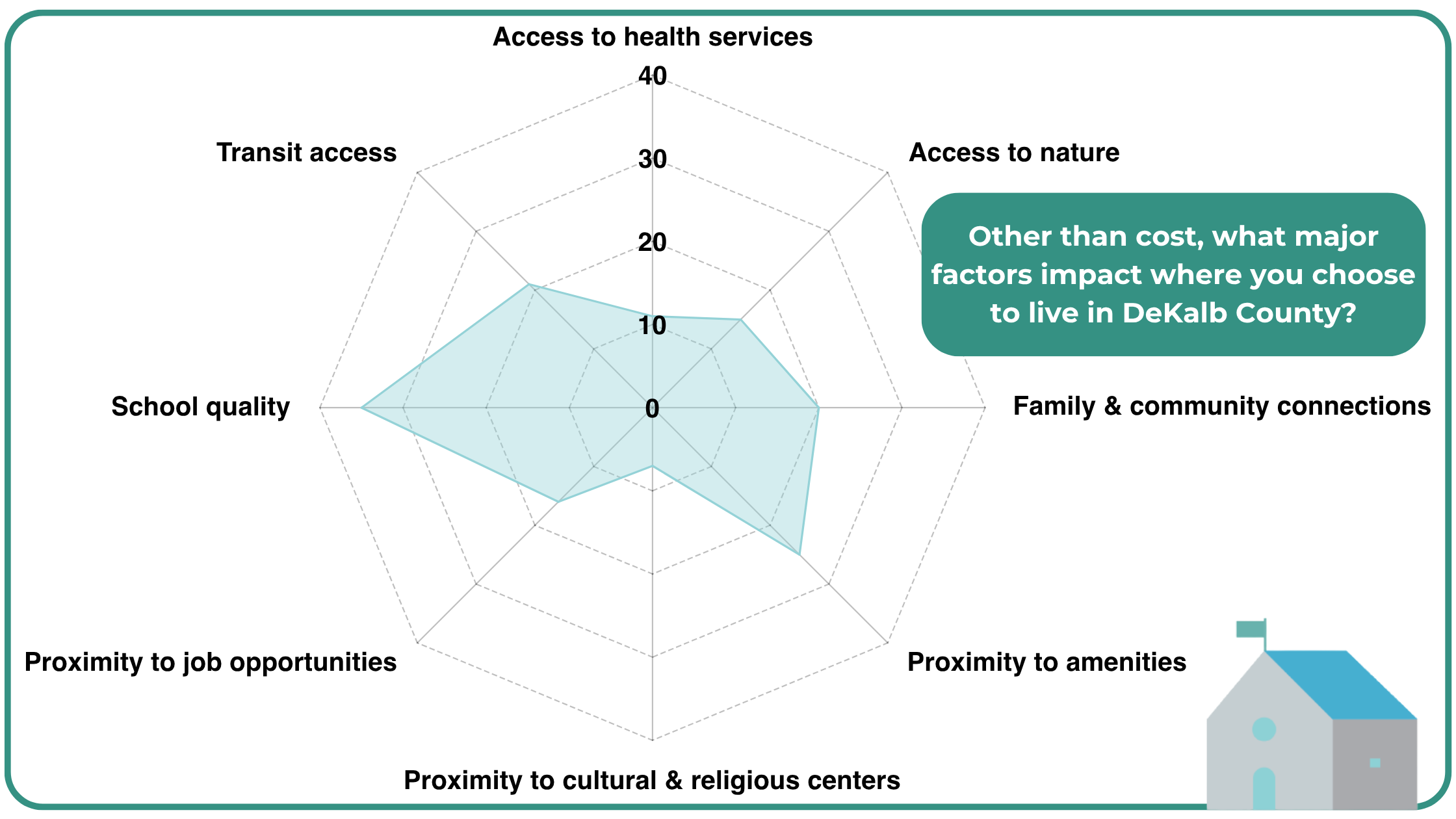
- Attendees most frequently cited school quality as the major driving factor influencing where they choose to live other than cost.
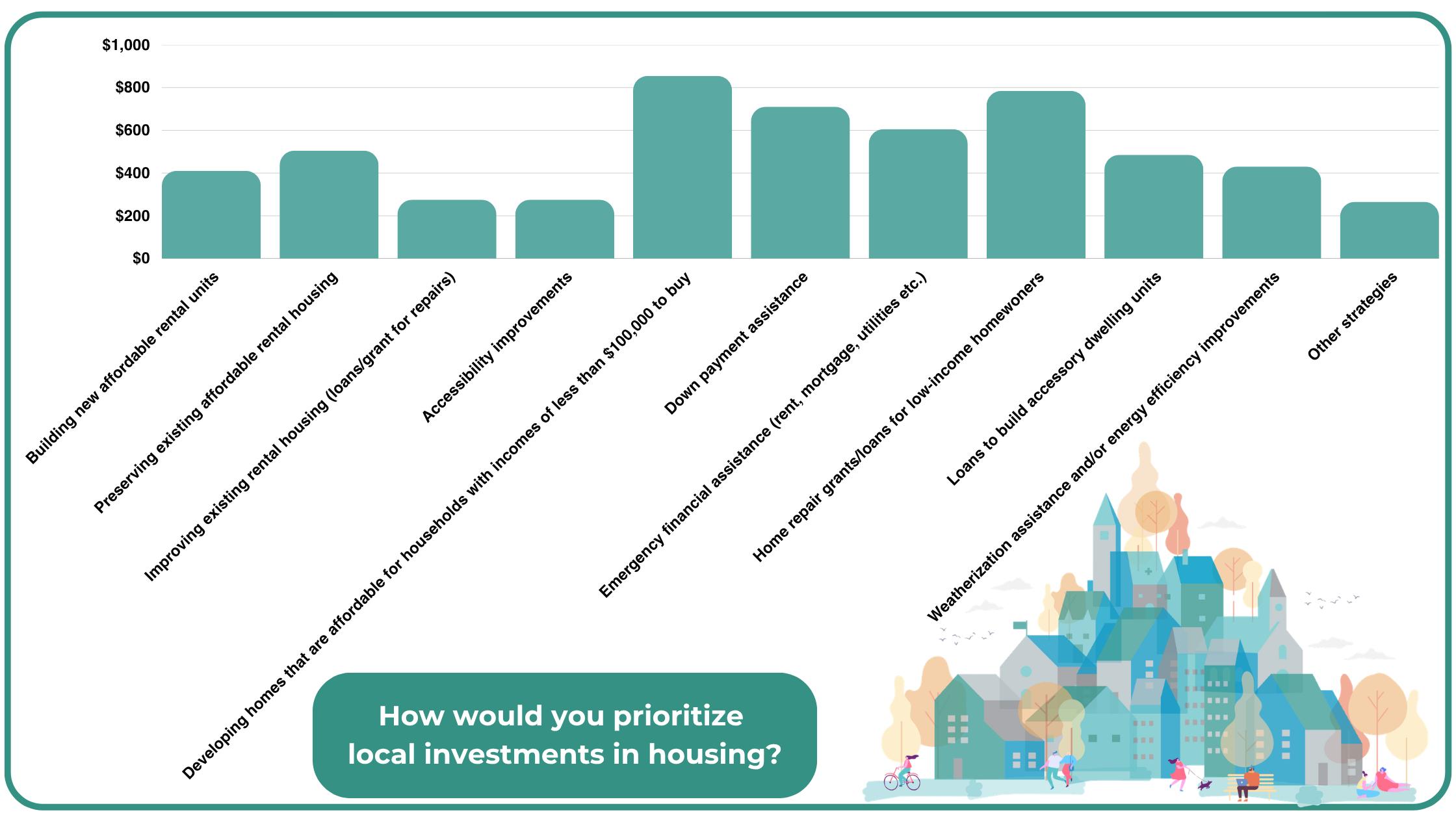
- Residents want more investment in strategies that will develop homes affordable to buy for households making less than $100,000 a year.
Navigate the Tabs Below to Learn More!
Goals & Priorities
Housing Priorities & Goals
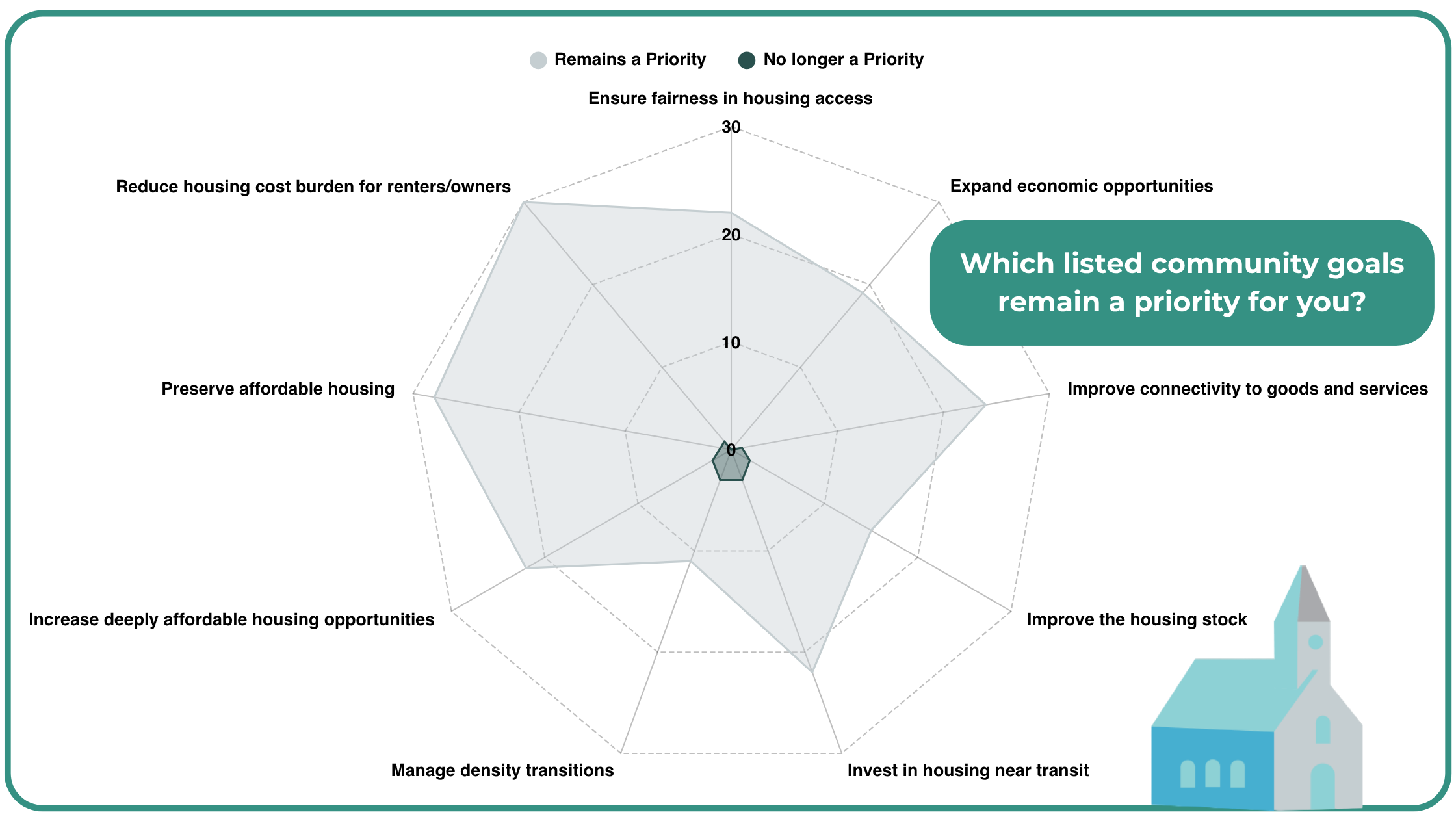
Which Listed Community Goals Remain A Priority For You?
For this activity, participants were asked to indicate which community housing goals (from a set derived from DeKalb County’s existing plans, programs, and policies) remained a priority for them by voting with green stickers. Below is a list of those housing goals ordered by number of votes received (vote count in parentheses):
- Reduce housing cost burden for renters/owners (30)
- Preserve affordable housing (28)
- Improve connectivity to goods and services (24)
- Ensure fairness in housing access; Increase deeply affordable housing opportunities; Invest in housing near transit (22)
- Expand economic opportunities (19)
- Improve the housing stock (15)
- Manage density transition (11)
Participants were also asked to identify any of the goals which were no longer a priority for them by voting with red stickers. Below is a list of those housing goals ordered by number of votes received (vote count in parentheses):
- Invest in housing near transit; Manage density transitions (3)
- Improve housing stock; Increase deeply affordable housing opportunities (2)
- Improve connectivity to goods and services; Preserve affordable housing; Reduce housing cost burden for renters/owners (1)
- Ensure fairness in housing access; Expand economic opportunities (0)
Barriers to Buy/Rent
Barriers to Buying and Renting Housing
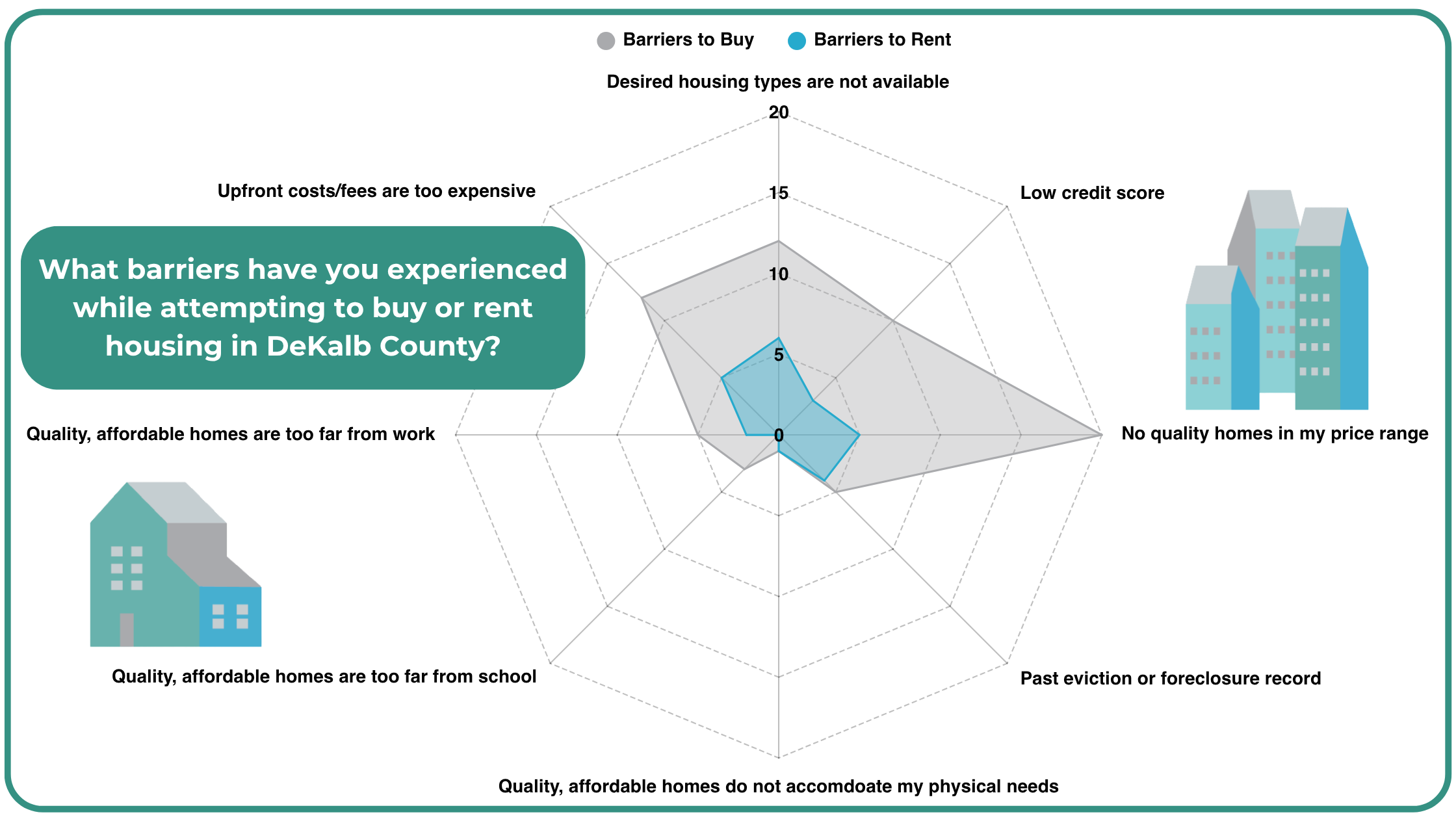
What Barriers Have You Experienced While Attempting To Buy Or Rent Housing In DeKalb County?
For this activity, participants were asked to indicate any barriers encountered when attempting to buy housing by voting with blue stickers. Below is a list of those barriers ordered by number of votes received (vote count in parentheses):
- No quality homes in my price range (20)
- Desired housing types are not available; Upfront costs/fees are too expensive (12)
- Low credit score (10)
- Past eviction or foreclosure record; Quality, affordable homes are too far from work (5)
- Quality, affordable homes are too far from school (3)
- Quality, affordable homes do not accommodate my physical needs (1)
Participants were also asked to identify which of these barriers they encountered when attempting to rent housing by voting with green stickers. Below is a list of those barriers ordered by number of votes received (vote count in parentheses):
- Desired housing types are not available (6)
- No quality homes in my price range; Upfront costs/fees are too expensive (5)
- Past eviction or foreclosure record (4)
- Low credit score (3)
- Quality, affordable homes are too far from work (2)
- Quality, affordable homes do not accommodate my physical needs (1)
- Quality, affordable homes are too far from school (0)
Housing Type Preferences
Housing Type Preferences
What Kind of Housing Do You Want To See In Your Neighborhood?
For this activity, participants were asked to indicate what types of housing they would prefer to see in their neighborhood by voting with black stickers. Below is a list of those housing types ordered by number of votes received (vote count in parentheses):
- Single-family homes (18)
- Duplexes (16)
- Quadplexes (15)
- Small multi-family building: <10 units (13)
- Townhouses; Triplexes (10)
- Medium multi-family building: 10-50 units (8)
- Large multi-family building: 50+ units (6)
Participants were also asked to use color-coded pins to identify where they would want to see these housing types on Commission District maps. Below is a digital recreation of the responses received across the County:
Factors Other Than Cost
Housing Choice Factors (other than Cost)
Other Than Cost, What Major Factors Impact Where You Choose To Live In DeKalb County?
For this activity, participants were asked to indicate what factors influence their housing decisions (other than cost) by voting with black stickers. Below is a list of those factors ordered by number of votes received (vote count in parentheses):
- School quality (35)
- Proximity to amenities (25)
- Transit access (21)
- Family/community connections (20)
- Proximity to job opportunities (16)
- Access to nature (15)
- Access to health services (11)
- Proximity to cultural/religious centers (7)
Strategic Investments
Investments in Housing Strategies
How Would You Prioritize Local Investments In Housing?
For this activity, participants were given $100 of faux money and asked to “invest” in a set of strategies to identify funding priorities. Below is a list of those strategies ordered by funding amounts (dollar value in parentheses):
- Developing homes that are affordable for households with incomes of les than $100,000 to buy ($855)
- Home repair grants/loans for low-income homeowners ($785)
- Down payment assistance ($710)
- Emergency financial assistance for rent, mortgage, utilities, etc. ($605)
- Preserve existing affordable rental housing ($505)
- Loans to build accessory dwelling units ($485)
- Weatherization assistance and/or energy efficiency improvements ($430)
- Building new affordable rental units ($410)
- Accessibility improvements; Improving existing rental housing with loans/grants for repairs ($275)
- Other strategies ($265)